
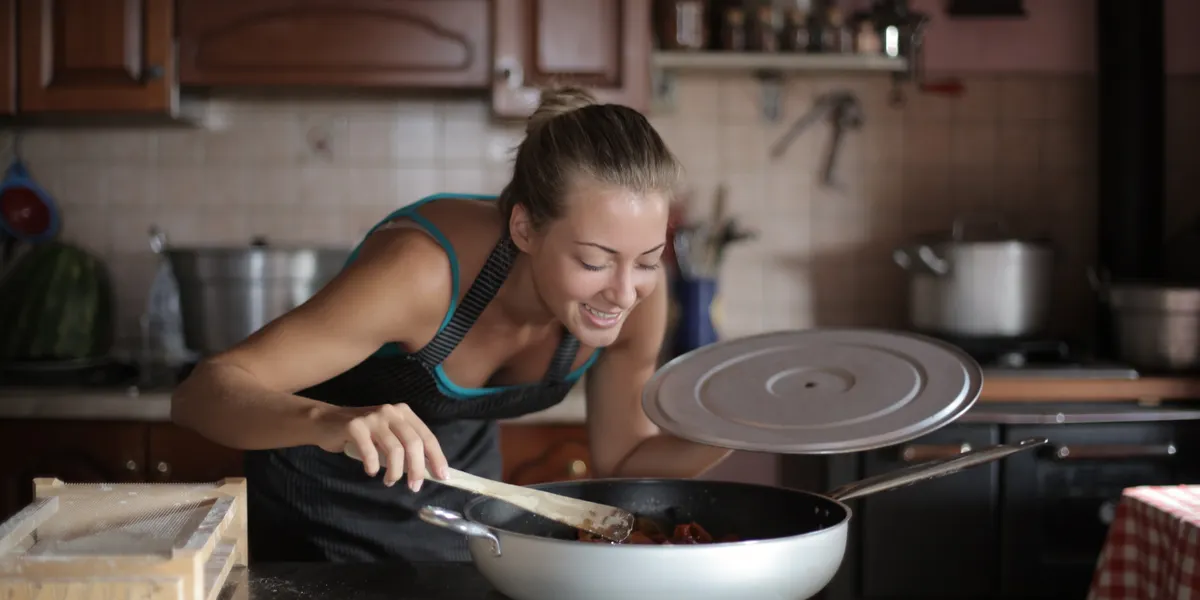
Set the table before you light the stove
Mise en place is a restaurant phrase that means, roughly, everything in its place. In a professional kitchen it looks like rows of labelled containers. At home it is far less formal and far more useful than that image suggests: it is the decision to do all of your thinking before any heat is involved.
The reason it matters is timing. Once a pan is hot, the clock belongs to the food, not to you. Every second spent hunting for the paprika or peeling garlic one-handed is a second the onions keep cooking. Prepping first removes that conflict entirely: you chop when nothing is at risk, and then you cook with both hands and your full attention.
Start smaller than the full restaurant version. Read to the end, cut everything the recipe asks you to cut, put the spices in one small dish, and set out the pans. Keep a bowl on the counter for trimmings and a damp cloth under the board so it stops sliding. Ten quiet minutes removes almost every later panic.
The ten-minute version
Cut, measure, arrange, clear. If you can see every ingredient you need without opening a cupboard, you are ready to turn the heat on.
The knife is doing most of the work
Almost every dish begins with cutting, and almost every home kitchen makes that step harder than it needs to be. A dull blade does not glide; it wedges and slips. It bruises herbs into a dark paste, crushes tomatoes instead of slicing them, and demands so much downward force that your hand tires and your accuracy drifts.
A sharp knife is also the safer one. Sharp edges bite where you put them; dull edges skid across a rounded onion and find your knuckle.
Two different jobs keep an edge working. Honing, with a steel, straightens an edge that has folded over with use — quick, frequent, no metal removed. Sharpening actually grinds a new edge and is needed far less often, perhaps twice a year for a home cook. If a blade skates off a tomato skin instead of catching it, sharpening is overdue.
Technique matters less than people fear. Curl the fingertips of your guiding hand under so your knuckles rest against the flat of the blade, and let those knuckles set the width of each slice. Keep the tip on the board and rock rather than chop. Cut to a consistent size so everything cooks at the same rate.
Heat is an ingredient, not a setting
If mise en place fixes your timing and a sharp knife fixes your prep, heat control is what changes how food actually tastes. Browning is not cosmetic. The deep, savoury flavours in a seared steak or a properly caramelised onion come from reactions that only happen above the boiling point of water — which means they only happen once the surface of the food is dry and the pan is genuinely hot.
That single fact explains most disappointing pan cooking. Food added to a lukewarm pan releases its moisture before the surface can dry, then sits and simmers in it. Crowding does the same thing by another route: too much cold food at once drags the temperature down and traps steam between the pieces. Give each piece room, and cook in two batches rather than one crowded one.
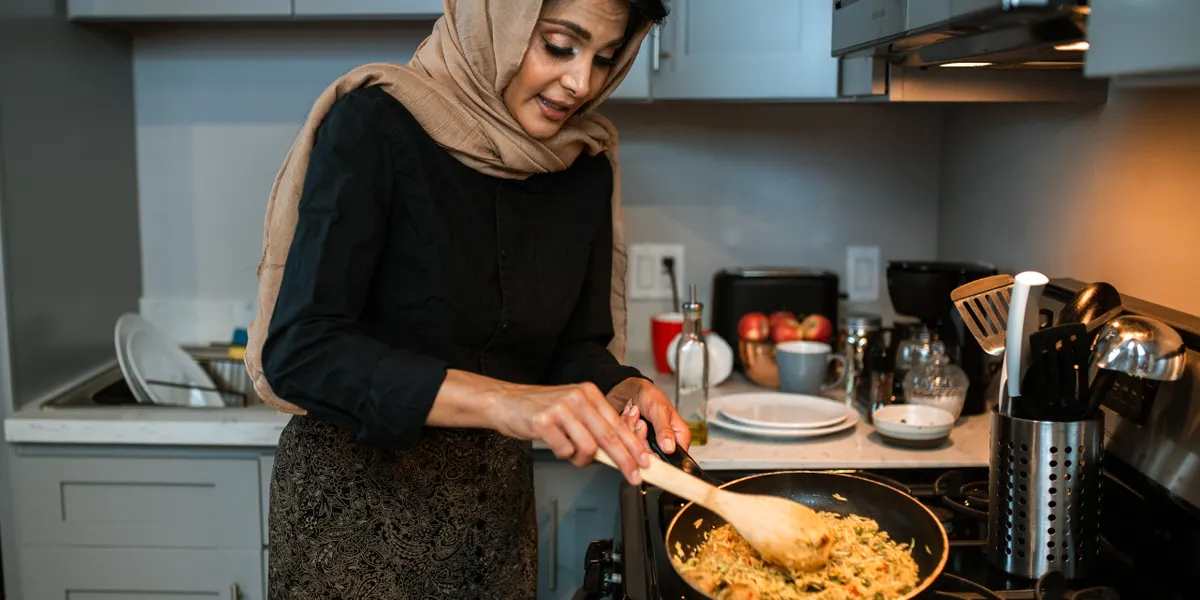
It also helps to name what you are doing. Searing uses high heat and stillness: the food goes in dry, is not touched, and is turned only once a crust has formed and released on its own. Sautéing uses medium-high heat and constant movement to cook smaller pieces quickly. Sweating uses low heat, a pinch of salt and often a lid, to soften onions or leeks until they turn translucent and sweet without colouring. Same pan, three completely different outcomes — and choosing the wrong one is why a dish can be technically cooked and still taste like nothing.
Listen to the pan. Oil that shimmers and moves like water is ready; oil smoking hard has gone past it. A confident sizzle is what you want; a quiet hiss means the crust is already lost.
“Cooked” and “delicious” are different targets. Heat is the control that separates them.
Season in layers, taste as you go
Seasoning only at the end is the most common habit worth breaking. Salt added to a finished dish sits on the surface and reads as sharp and separate. Salt added along the way dissolves into each component and becomes part of it.
So season in layers. A pinch when the onions go in. A pinch on the meat before it hits the pan. A measured hand with the pasta water. Each addition seasons the thing in front of you rather than the whole pot at once.
That only works if you taste. Keep a spoon beside the pan and use it at every stage, not just at the end when your options have narrowed to adding more of something.
When a dish tastes flat, salt is the usual suspect but not always the answer. Four levers are in play, and it is worth learning to tell them apart.
Salt makes flavours legible — it does not add its own so much as reveal what is already there. Acid, from lemon, vinegar, yoghurt or tomatoes, lifts and sharpens. A dish that tastes heavy and dull is usually short of acid, not salt.
Fat carries flavour and softens edges: a knob of butter, a swirl of good oil or a spoon of cream rounds out something thin. Heat, meaning pepper, chilli or mustard, adds a lift at the back of the palate.
So ask the question. Flat wants salt. Dull wants acid. Thin wants fat. One-note wants a little heat. Adjust one lever at a time and taste in between — two changes at once teaches you nothing.
Salt, acid, fat, heat
Flat wants salt. Dull wants acid. Thin wants fat. One-note wants a little heat. One lever at a time, tasting in between.
The brown bits are where flavour lives
After you brown something in a pan, a layer of stuck, darkened residue is left behind. That is fond, and it is not mess — it is concentrated flavour caught on the metal. Scrubbing it away throws out the best part of what you just made.
Deglazing recovers it. With the pan still hot, add a splash of liquid — wine, stock, a little vinegar cut with water, even plain water — and scrape the base with a wooden spoon while it bubbles. The residue dissolves in seconds and the liquid turns dark and glossy. That is the start of a pan sauce, and it takes under a minute.
Aromatics do the parallel job at the beginning. Onion, carrot and celery softened slowly in fat; onion, garlic and ginger; a bay leaf and a strip of lemon peel. They reward patience — onions sweated gently for fifteen minutes taste nothing like onions rushed for three.
Order matters too. Onions first, because they take longest. Garlic much later, because it burns quickly and turns bitter. Ground spices last of all, given thirty seconds in the hot fat to bloom before liquid goes in.
A pantry that rescues a Tuesday
A well-chosen pantry is not a wall of jars. It is a small set of ingredients that combine into meals when the fridge looks empty and nobody wants to shop.
Think in five slots rather than in specific recipes. Something starchy, something acidic, something salty and savoury, a good fat, and a couple of aromatics that keep for weeks.
Starch is pasta, rice, noodles, couscous or potatoes — the part that makes it dinner rather than a side dish.
Acid is tinned tomatoes, vinegar, lemons, capers or pickles. It is what makes a cupboard meal taste alive rather than beige.
Salty and savoury covers stock, soy sauce, anchovies, miso, parmesan rinds and tinned beans — the depth a fresh ingredient would normally provide.
Fat means an everyday cooking oil and something better for finishing. Aromatics means onions, garlic and whatever hardy herb you like.
With those five stocked, a bare fridge still produces a tomato pasta, a rice bowl or a bean soup. Buy spices in small amounts and label the date — stale spice is why a familiar recipe can taste like less.
Resting, carryover and doneness by feel
Food keeps cooking after it leaves the heat. The outside is hotter than the inside, and that heat travels inward for several minutes — carryover cooking. Ignore it and everything arrives slightly overdone, because you cooked to the finish line instead of stopping short of it.
Resting takes advantage of that. Pull a chop or a chicken breast a little before it looks done, put it on a warm plate and leave it alone. The temperature evens out, the structure settles, and the juices stay in the food instead of flooding the board. A few minutes suits a single portion; a large roast wants longer, loosely tented.
The same principle reaches well beyond meat. Take pasta out a shade early, because it keeps softening in the sauce. Pull vegetables from the tray while they still have bite. Let a baked dish sit so it can be cut cleanly rather than collapsing on the spoon.
Judging doneness gets easier with practice, and a thermometer removes the guesswork entirely. It is also the fastest way to build intuition: press the meat, note how firm it feels, then check the reading. After a dozen repetitions your hand starts to know the answer first.
Stop short, then wait
Pull food a little before it looks ready and let carryover heat finish it. Safe food handling and safe internal temperatures remain your own responsibility — check current guidance for anything you are unsure about.
Read the recipe like a map
A recipe is a set of directions, and nobody sets off on a drive by reading only the first turn. Yet that is how most recipes get cooked: line by line, discovering each requirement as it becomes urgent.
Read the whole thing first — ingredients and method, start to finish, before you touch anything. You are looking for four things, each of which takes seconds to spot on paper and ten stressful minutes to discover mid-recipe.
First, hidden waiting: marinating, chilling, resting, dough proving, beans soaking. Second, equipment you may not own, or a second pan you will need heated and ready.
Third, ingredients that appear only in the method — a splash of the pasta water, a reserved spoonful of marinade, the zest of a lemon you have already juiced.
Fourth, simultaneous steps, where two things must happen at once and one should have been started earlier. Marking those is the difference between a calm session and a scramble.
Translate vague instructions into your own terms, too. “Cook until golden” on your stove may take twice the stated time. Treat quoted times as estimates and the described appearance, smell and sound as the real instruction.
- Read to the end before anything is cut, heated or opened.
- Mark every wait, every second pan and every ingredient hiding in the method.
- Trust the description over the clock, and your own taste over both.
Where this leaves you
None of this is complicated, which is exactly why it gets skipped. Prep first. Keep the knife sharp. Let the pan get properly hot and stop crowding it. Season a little at every stage and taste after each one. Save the brown bits. Keep five useful things in the cupboard. Stop cooking slightly early. Read before you start.
Adopt them one at a time. Cook three dinners with everything prepped in advance and nothing else changed, and the difference is immediate. Habits stack quietly, and after a few months recipes start to read like suggestions you can argue with — which is where cooking gets genuinely enjoyable.